
How We Create the Best Home Offices for Our Clients

The way we work has shifted, and for many of our clients, the home office is no longer a temporary solution. It’s a space that needs to support focus, flexibility, and wellbeing, while still feeling connected to the rest of the home.
A well-designed home office should encourage productivity without feeling clinical, and calm without losing purpose. It’s a balance that comes from thoughtful planning, careful detailing, and a clear understanding of how the space will truly be used.
Below are some of the key considerations we return to time and again when designing home offices for our clients.
Understanding How You Work
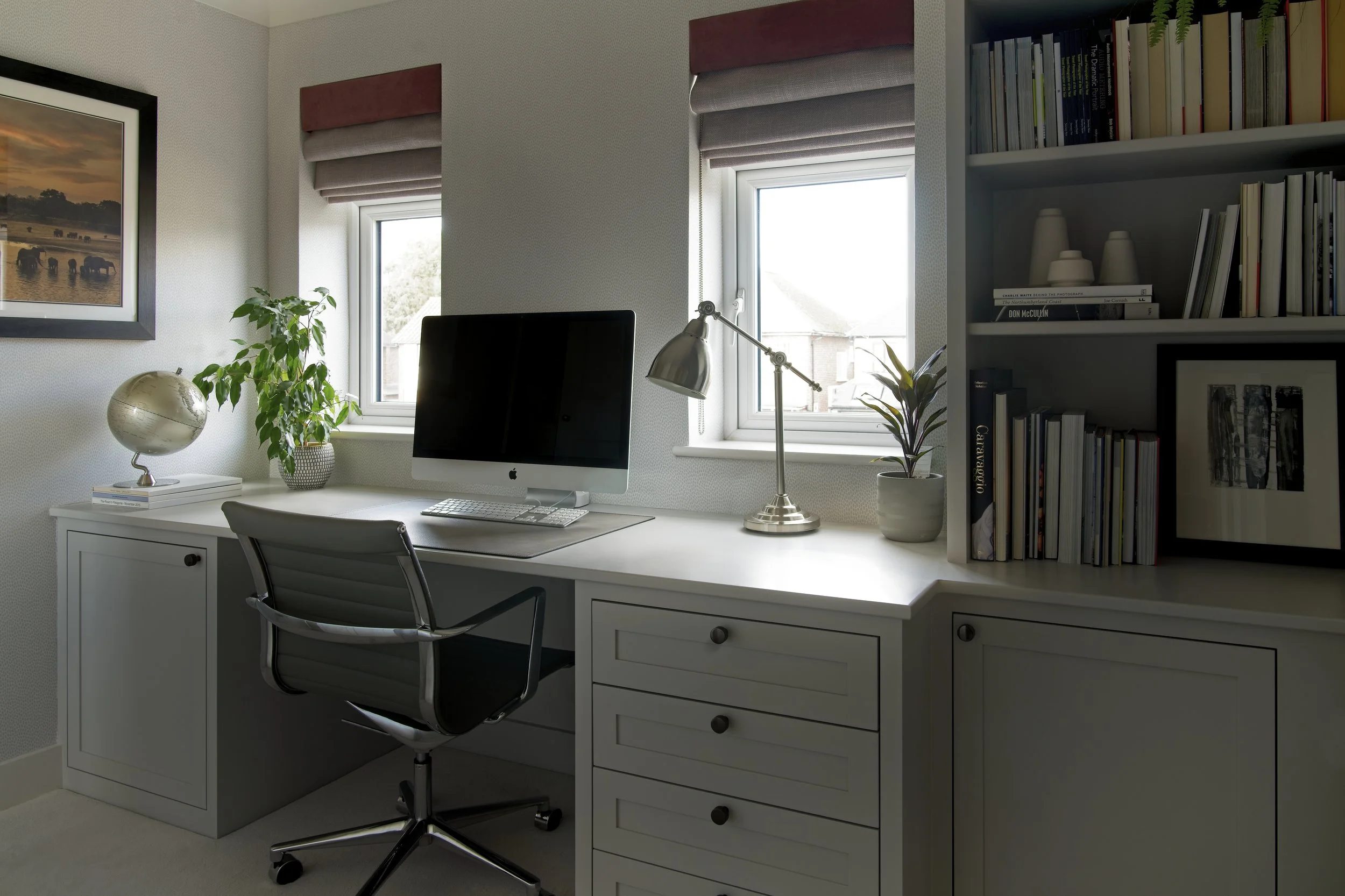
Every successful home office starts with understanding the person using it. How you work, how often you use the space, and what else the room may need to accommodate all inform the design from the outset.
For some clients, the office needs to work harder, doubling as a creative space for children, a quiet retreat, or somewhere to step away and reset during the day. By understanding these layers early on, we’re able to design a space that supports every part of daily life rather than competing with it.
Layout plays a significant role here. Natural light is prioritised wherever possible, alongside privacy, comfort, and practicality. Sightlines, video call backgrounds, and ease of movement are all carefully considered, ensuring the space feels intuitive and comfortable to use throughout the day.
Bespoke Storage That Works Hard
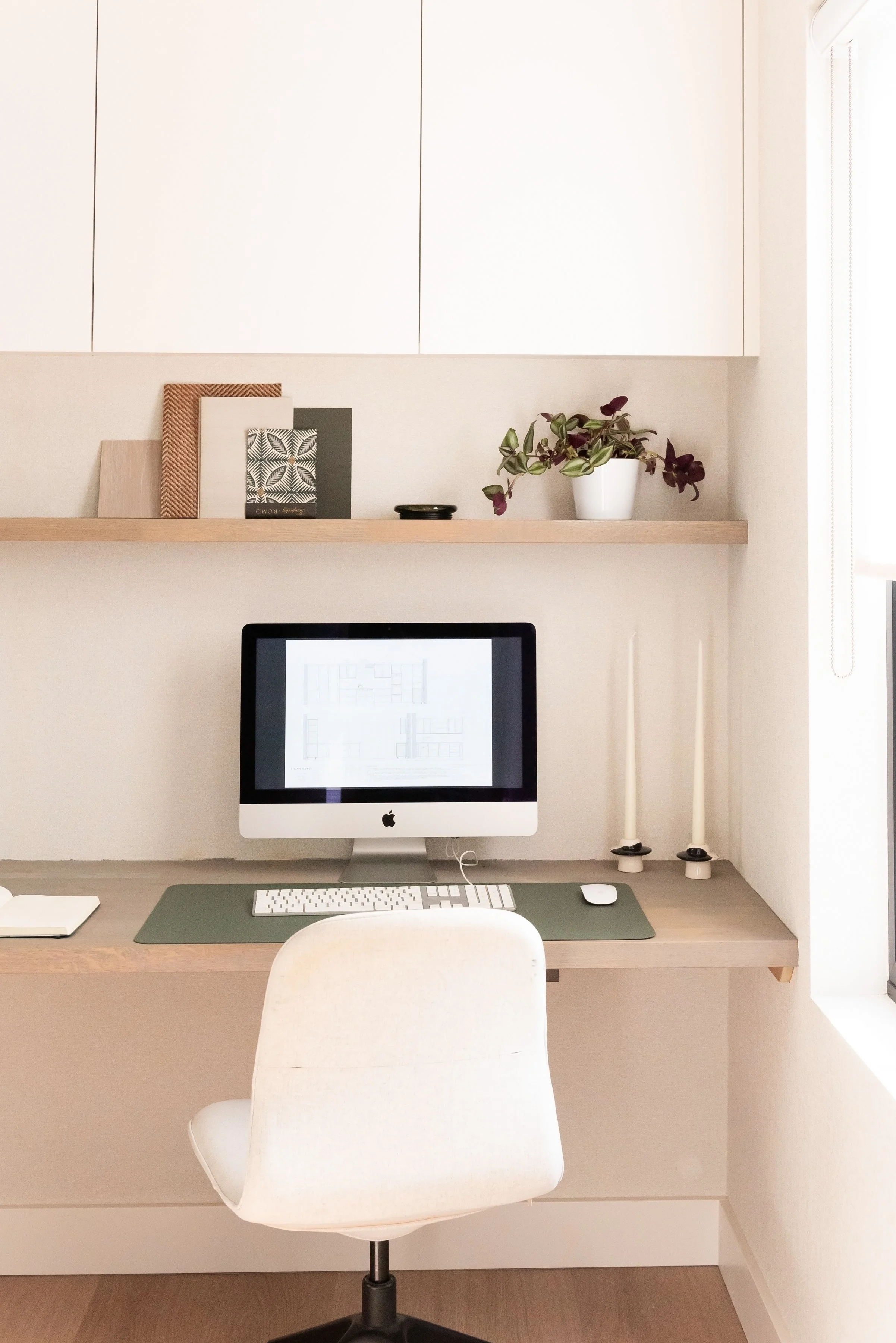
Storage is often one of the most overlooked elements of a home office, yet it has the greatest impact on how the space functions day to day. When storage is designed around how you actually work, it removes friction and allows the room to feel calm and organised.
Bespoke joinery enables us to respond precisely to the room and its proportions, making use of awkward corners or unusual layouts that might otherwise be wasted. Shelving depths, drawer configurations, and integrated housing for printers, monitors, and paperwork are all tailored to the individual.
This level of detail results in storage that feels effortless to use and furniture that stands the test of time, both practically and aesthetically.
Materials and Colour
The materials and finishes within a home office play a powerful role in how the space feels to occupy. Soft furnishings and textured surfaces help absorb sound and reduce echo, creating a calmer acoustic environment that supports concentration.
Colour is chosen with equal care. Muted, considered palettes help promote focus, while natural materials and subtle pattern add warmth and depth. Introducing elements such as timber, tactile fabrics, and houseplants brings a sense of balance and connection to the outdoors, helping the space feel grounded and welcoming.
Layered Lighting
Lighting is fundamental to how a home office performs. A single overhead light is rarely sufficient for a space that needs to adapt throughout the day.
We design layered lighting schemes that include task lighting for focused work, ambient lighting for comfort, and practical lighting for the room as a whole. This approach allows the mood of the space to shift naturally, supporting long working days without fatigue and ensuring the room feels as good in the early morning as it does in the evening.
A Considered Investment
A home office should feel like an intentional part of the home, not an afterthought. When designed with clarity and care, it becomes a space that enhances daily life, supports productivity, and adds long-term value.
At Fiona Brass Interiors, home offices are approached with the same level of thought and detail as any other investment space. Each element is carefully considered, ensuring the finished room feels calm, functional, and beautifully liveable.
If you’re considering creating or reworking a home office, early planning makes all the difference. A clear vision and thoughtful design ensure the space works effortlessly now and evolves with you over time.