There is a particular kind of morning most homes are for.
Not the one where the photographer arrives and the cushions get plumped and the flowers get arranged just so.
The other one.
The one where someone is standing at the kitchen island in their pyjamas, half-listening to the activity of their family around them whilst making lunches and getting ready for the day ahead.
That morning happens thousands of times over the life of a home. The photographed version happens once, if at all.
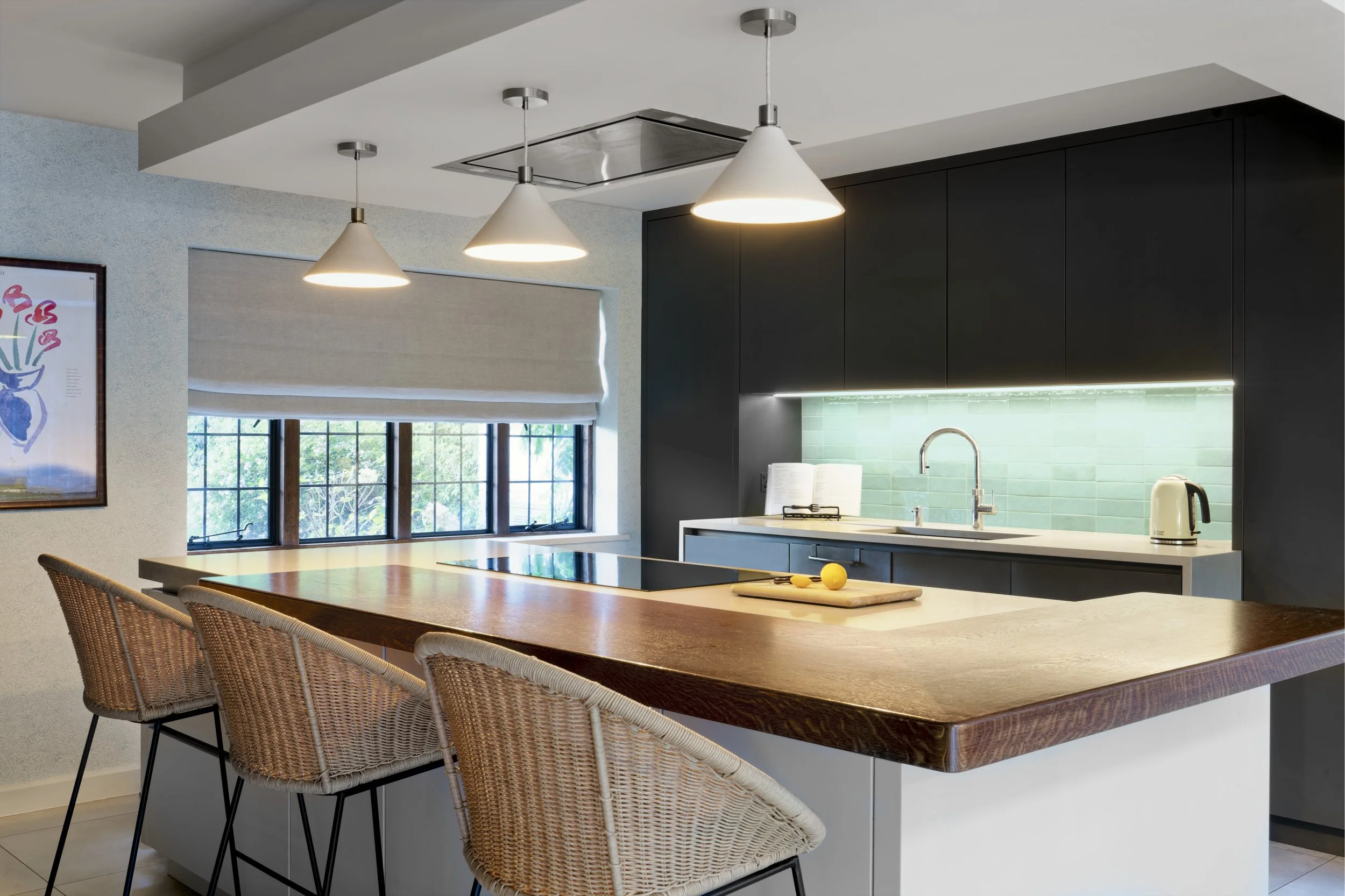
The Esher Residence before the morning begins
We think about this often, because it's surprisingly easy to design for the wrong morning. It's easy to fall in love with how a room will look in a single, perfect photograph and forget to ask how it will feel on the five hundredth ordinary Tuesday.
A sofa that photographs beautifully but sits at the wrong height for the person who uses it every evening.
A kitchen island styled with three ceramic bowls that, within a week, makes room for a laptop, a school bag and a bowl of cereal.
Beautiful rooms matter.
But what matters even more is how they make everyday life feel.
The homes we remember best, years after we've finished them, are rarely the ones that made the strongest portfolio image.
They're the ones where a client calls eighteen months later, not to tell us how beautiful something looked, but to tell us something much quieter.
That the kitchen has somehow become the place everyone naturally ends up.
That the snug is finally used in the way they'd always hoped.
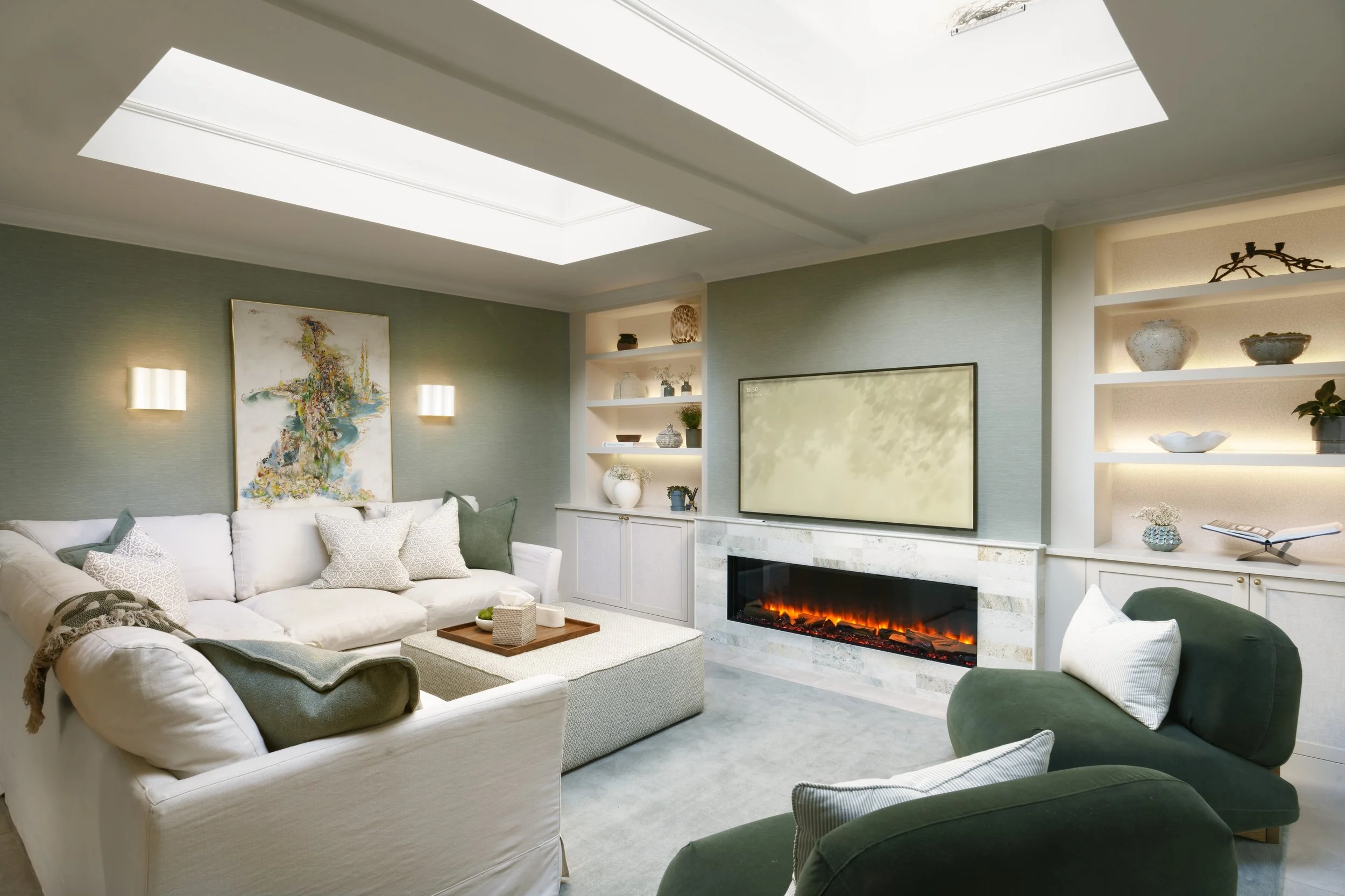
The Esher Residence ready for movie night
That the house has stopped feeling like something to maintain and started feeling like somewhere to simply be.
That's the shift we're really designing for.
Not just a beautiful room, but a better way to live in it.
It's why, on The Esher Residence, a full-house project for a busy family living across three floors and an annex, the brief was never simply to complete a collection of rooms.
It was to create a home that could keep pace with everyday life without losing its warmth or character.
We worked in phases so the family could continue living in their home throughout the project, because the point was never a perfect handover day. It was to create a home that already felt like theirs, supporting the way they lived from the very beginning and for years to come.
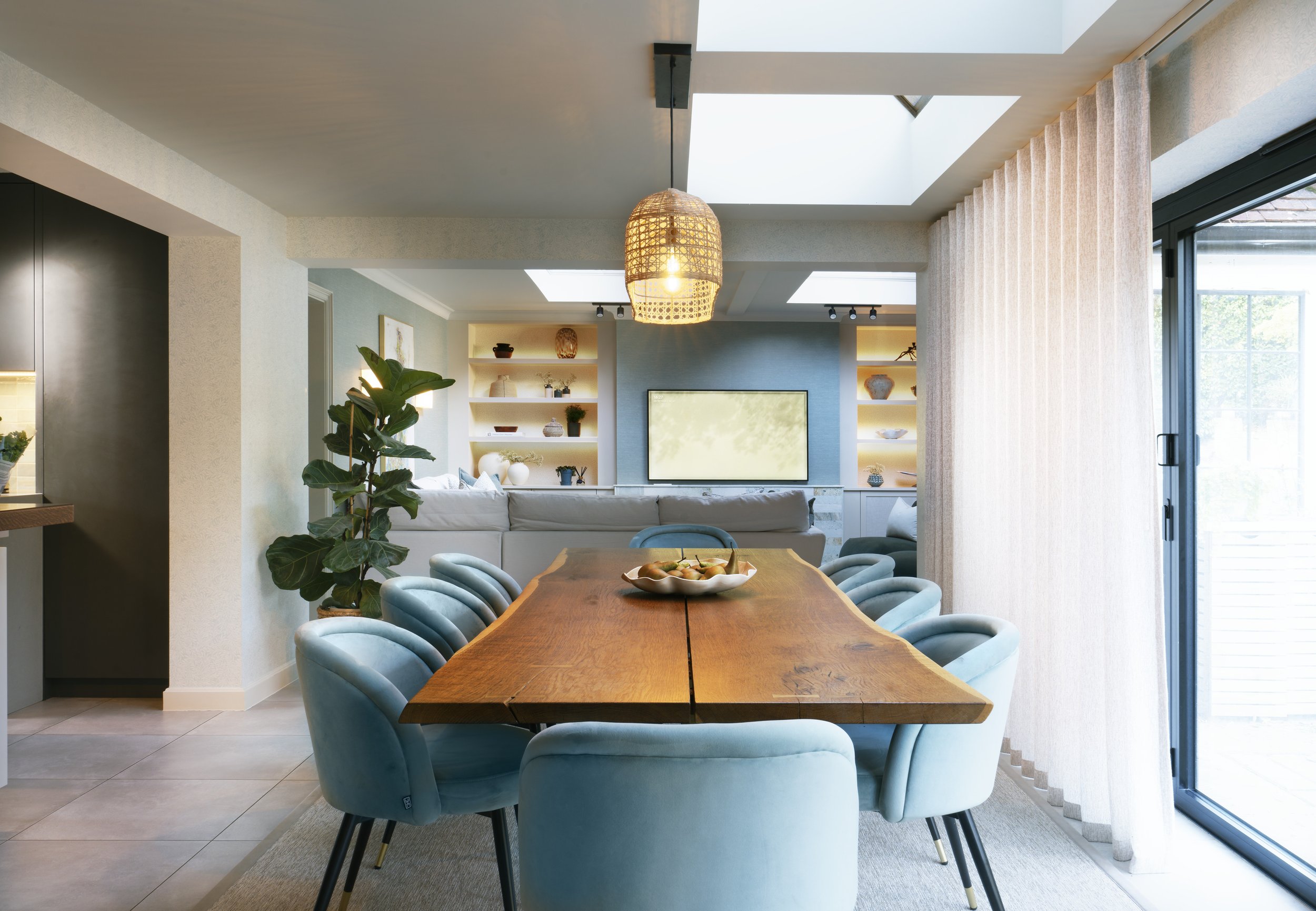
The Esher Residence before the dinner party begins
We saw something similar at The Long Ditton Family Home.
Our role wasn't to start again, but to bring warmth and a sense of completion to a house whose main structural work was already finished.
The brief focused on the details that shape everyday life. Timber tones balanced throughout to create a calm, cohesive feel. Artwork chosen specifically for that family. Sockets and switches considered rather than treated as an afterthought.
That project was also delivered in phases, allowing the family to remain in the home they were busy living their lives in.
It continues to evolve, and that's exactly as it should be, because it was designed around the family they are becoming, not simply the family they were on the day we finished.
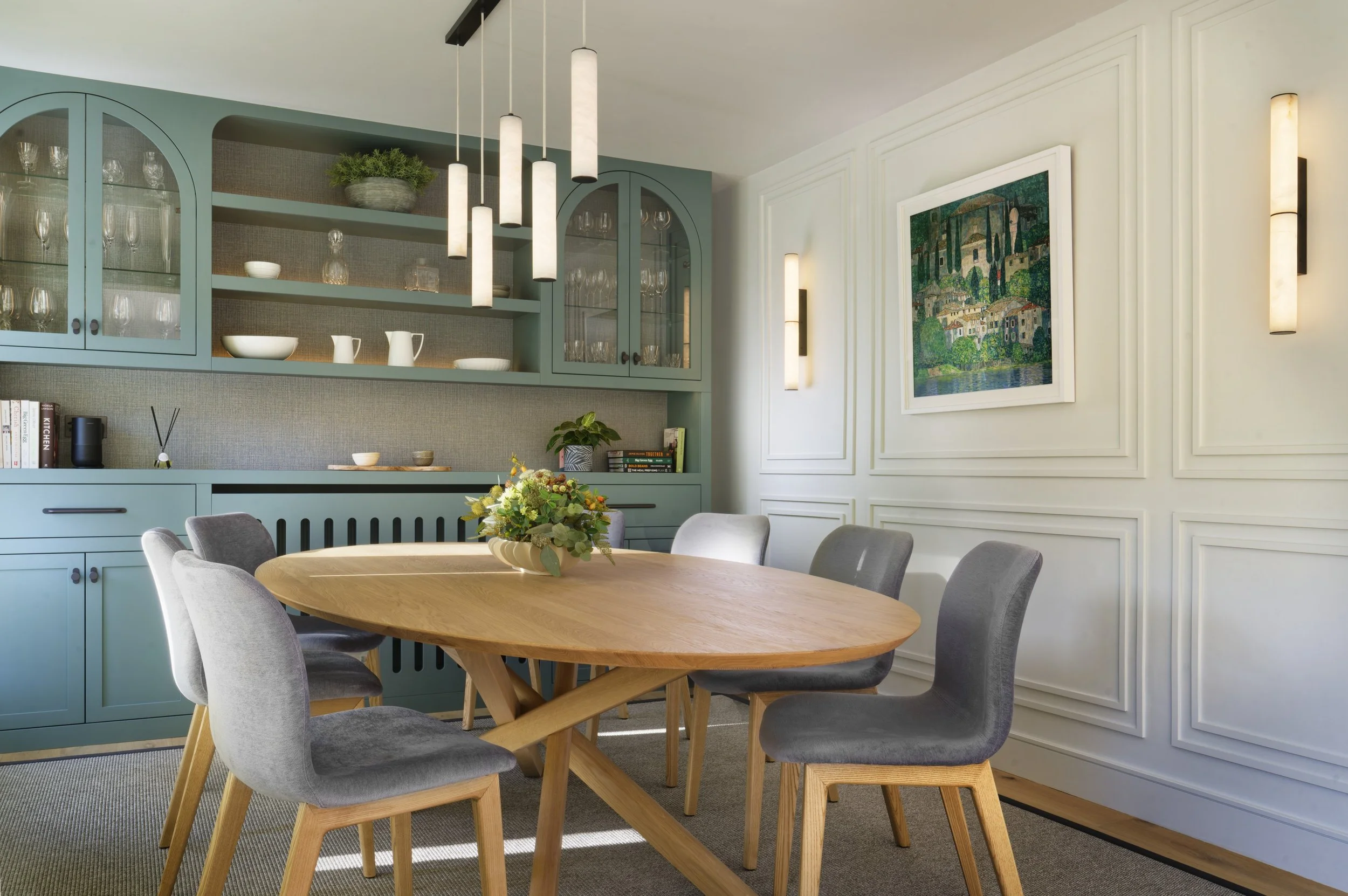
The Long Ditton Family Home was designed around an oversized dining table, used for much more than just eating
Years later, very few clients tell us how much they loved a particular fabric or paint colour.
They tell us the kitchen has become the heart of the house.
That family dinners happen around the island most evenings.
That everyone gravitates to the snug without really thinking about it.
That the room they once worried might never get used has quietly become everyone's favourite place to be.
Those conversations tell us far more about the success of a project than any photograph ever could.
It changes what we ask in a first meeting.
We're less interested in what's pinned to a mood board and more interested in what happens in a week.
Where do the keys get dropped?
Where do the school bags end up, regardless of where anyone would like them to end up?
Who gets up first, and what do they need before the rest of the house is awake?
Where does the ordinary chaos of family life live?
And how do we design around the truth of that rather than the tidier version of it?
None of this is romantic on paper.
It's closer to logistics than inspiration.
But it's where the real decisions get made, long before a single fabric or finish is chosen.
A home designed around how a family lives will always feel calmer than one designed around how they imagine they should live.
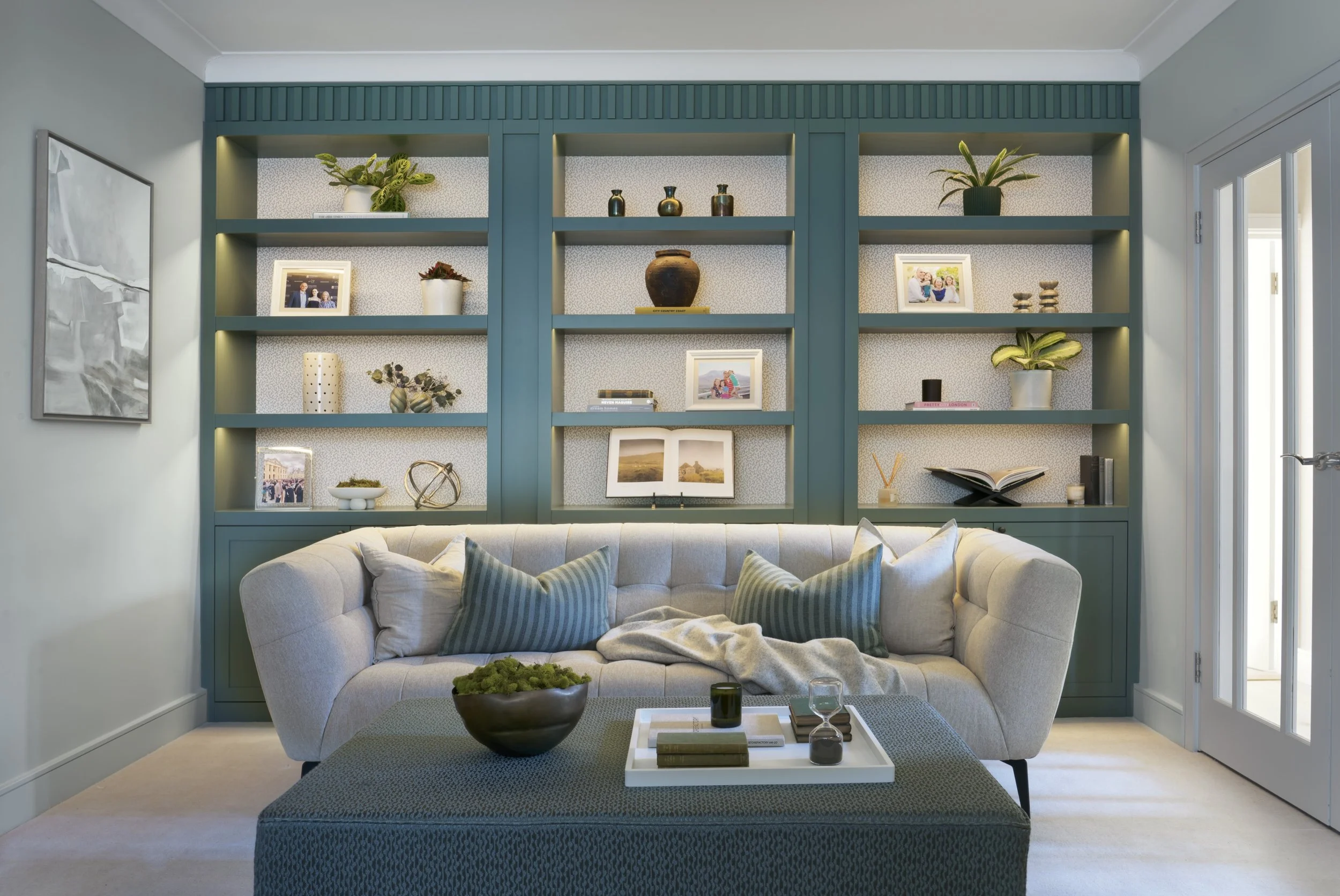
The Long Ditton Family Home with a room that both adults and children enjoy together
We'd rather build a home around a Tuesday than a Saturday night.
Saturday night is one evening.
Tuesday morning happens for the rest of the family's life in that house, and then again for whoever lives there next.
When you start with how people live, the design decisions become surprisingly clear.
You stop asking, "What's fashionable?" and start asking, "Will this still work for this family in five or ten years' time?"
The answers are often very different.
This is also why we're wary of trends and why we don't chase the look of a moment.
A trend is, by definition, designed for right now. It's a snapshot of taste at a particular point in time, and snapshots don't hold up well against thousands of ordinary mornings.
What does hold up is a home that's been thought through properly.
Rooms with the right proportions for how they're used.
Storage that reflects the reality of a household rather than the fantasy of one.
Materials chosen because they'll still feel right, and still wear well, in a decade, not because they're right for this particular year.
Families change too, and a home that's only designed for today rarely earns its keep.
The playroom becomes a study.
The formal dining room nobody used becomes the room where everyone gathers.
We try to design with enough flexibility that a home can absorb years of ordinary change without needing to be undone and started again.
None of this shows up in a single photograph.
It shows up over years, in the way a family moves through their home without thinking about it.
In the fact that nobody must negotiate around a badly placed door or apologise for a room that never quite worked.
In the ordinary, unremarkable ease of simply living there.
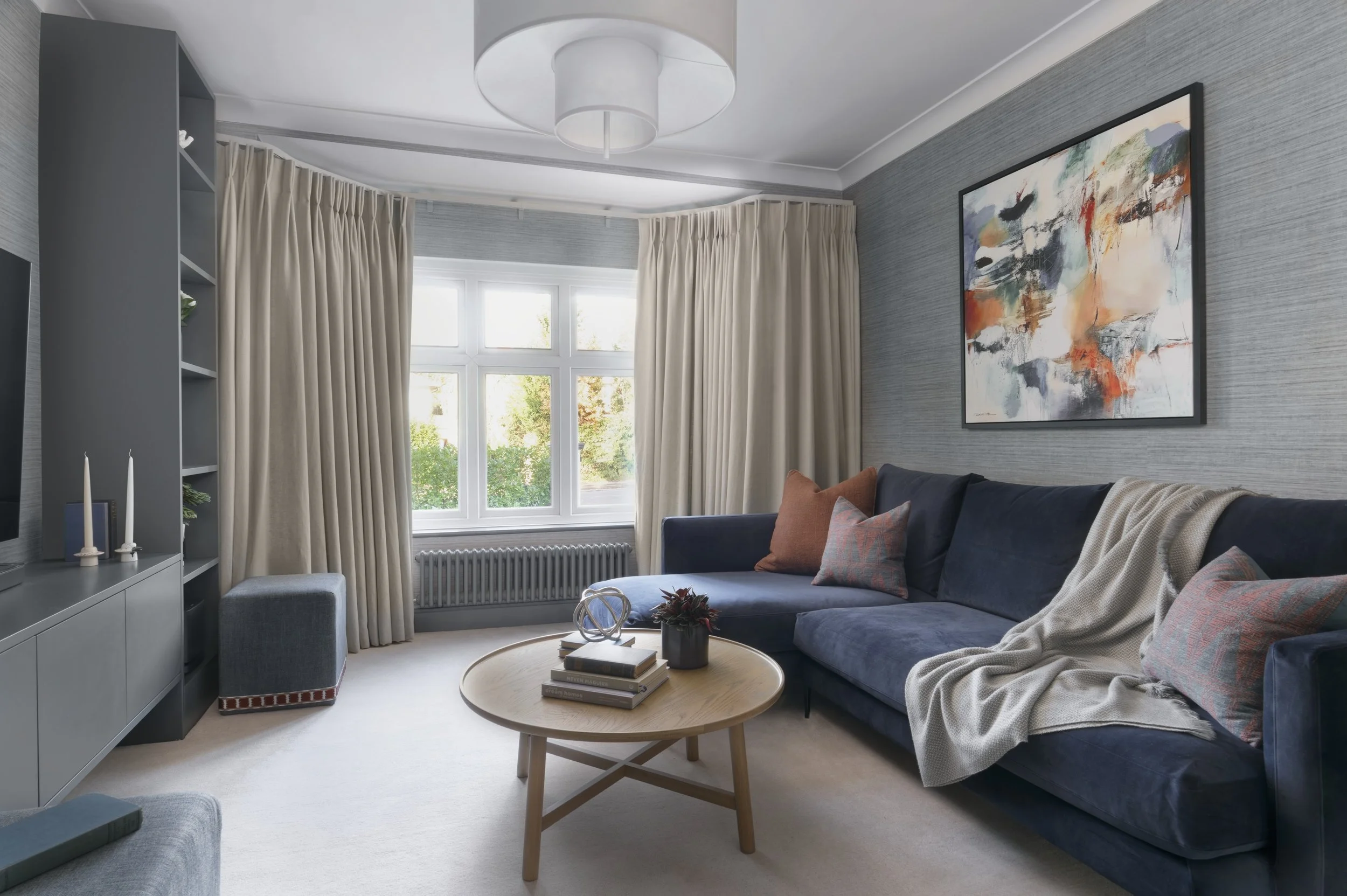
The Long Ditton Family Home has a snug cosy enough to be alone but large enough to enjoy with friends and family
We measure our work by that ease more than by anything else.
Not by how a project photographs on completion day, but by how it feels on an unremarkable Tuesday, three years later, when nobody is thinking about design at all.
That's usually the moment we know we got it right, because the house has quietly disappeared into the life being lived inside it.
If someone asked us what we believe a home is really for, this would be our answer.
Not for admiration.
Not for the photograph.
But for the thousands of ordinary moments that quietly become the story of a family's life.
The kettle boiling before the house wakes.
School shoes abandoned by the front door.
A conversation around the kitchen island that lasts longer than anyone expected.
These moments rarely feel remarkable at the time.
But they're the moments that quietly become the story of a family's life.
If thoughtful design can make more of those moments happen, then we've done our job.
Love how you live.